Max Aita's Olympic Weightlifting Program: The System That Built National Champions
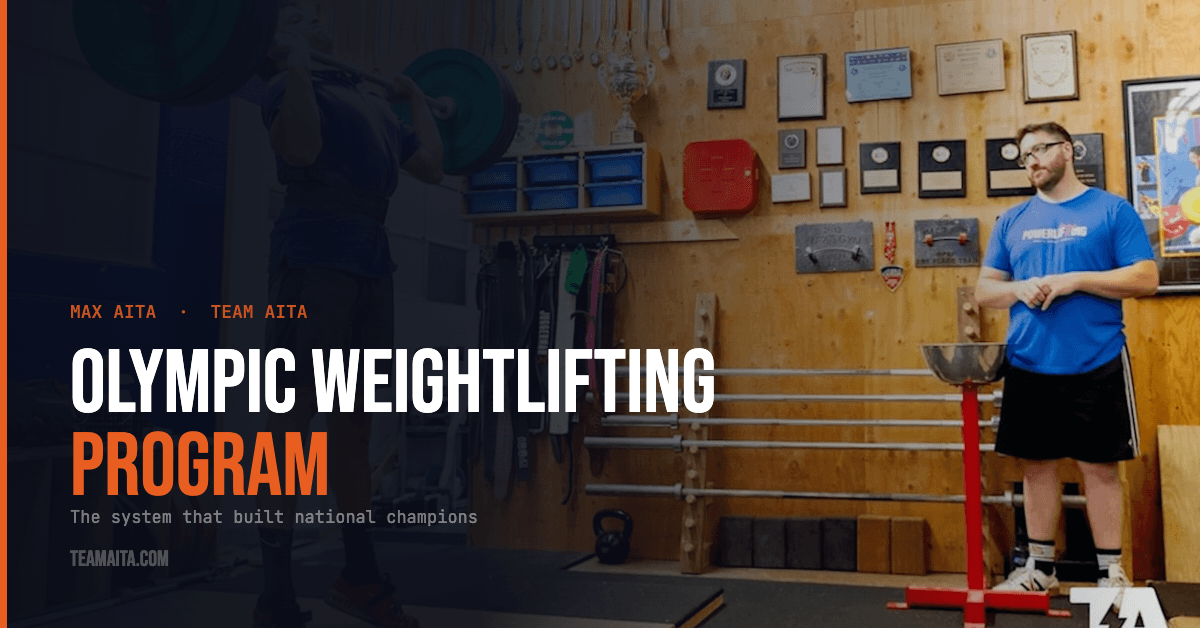
Max Aita's Olympic weightlifting program is built on a single principle: your training should adapt to you, not the other way around. Unlike static templates, this is a coach-designed, AI-enabled system that adjusts based on how you're actually performing — your session data, your recovery, your progression. The result is programming that works the way a real coaching relationship does. This is the same logic and system Max has used to produce national champions and competition-ready athletes at every level. It runs three days per week at its foundation, scales to five days per week for advanced athletes, and lives inside the Team Aita app.
This program is for serious athletes who have moved past the beginner stage and want a system they can trust to take them to the highest level of their ability — one that responds to how they actually train, not how a spreadsheet assumes they will. If you are brand new to weightlifting, start with our beginner program here before returning to this page.
Why Static Programs Fail Serious Weightlifters
Every static program makes the same assumption: that you will respond to training the same way another athlete does. That you will recover at the same rate, progress at the same pace, and share the same technical weaknesses. None of those things is true, and every serious weightlifter who has followed a generic template for long enough already knows it.
A template can get you started. It can introduce you to the structure of a training week, give you a framework for managing load and volume, and point you in a direction. But a template cannot see that your Clean is already ahead of your Snatch, and keep programming equal volume for both. It cannot detect that you are struggling to recover in week three and reduce intensity before you break down.
The result is that athletes on static programs often plateau, and not because they stopped working hard, but because the program stopped being relevant to them. Overload and progression, recovery capacity, and technical faults vary among athletes and within the same athlete as they progress in their athletic career. A program that does not account for any of this is, at best, a starting point. For a serious athlete with serious goals, it is a ceiling.
The best Olympic weightlifting program is not the one with the most volume or the most sophisticated periodization model. It is the one that is actually built around the athlete, tailored to their strengths, weaknesses, rate of adaptation, and technical faults. That is what individualized programming means in practice, and that is what this system is designed to deliver.
How Max Aita's Program Works
The Coaching Philosophy
Every decision in this program, from exercise selection, intensity, volume, and progression, is made by answering the same three questions: How much overload does this athlete actually need right now? What is the correct fatigue management strategy for this phase? And what is the right variation to address the technical fault that is limiting their performance?
That means every athlete's program looks slightly different, because every athlete is slightly different. An athlete who is already strong in the Clean does not need tons of Clean volume; they need Jerk-focused volume and technical refinement. An athlete with exceptionally strong legs does not need another eight weeks of heavy back Squats — they need to learn how to express that strength in the receiving position. An athlete whose primary fault is a forward bar path in the Snatch needs technical work, such as Snatches with No Foot movement, not more sets at higher percentages.
Technique before volume. Consistency before load. Adaptation before progression. In practice, this means listening to the athlete's feedback and then making adjustments. We do not push intensity until the technical foundation is stable enough to hold under fatigue. And we do not progress arbitrarily by the calendar — we progress based on what the athlete is actually demonstrating.
How the AI Adaptation Works
The AI adjustment layer is what separates this system from any template, including good ones. At all times, the system is “listening” to the athlete's feedback and input, the difficulty you reported, how your performance tracked against the plan, and uses that information to make targeted adjustments to the following week.
Here is a concrete example.
Athlete A and Athlete B both start the same program at week one. By week four, Athlete A has been consistently reporting that working sets feel easier than planned — they are ahead of the projected progression curve. The system responds by increasing working weights to match that new level of fitness, rather than letting the athlete coast through sets that no longer provide adequate stimulus.
Athlete B, over the same four weeks, has been reporting that training is harder than it should be for the given percentages, recovery is a struggle, and performance is dropping off mid-session. The system reduces volume and adjusts intensity down for the following week, allowing Athlete B to get back on track before the fatigue compounds into a breakdown. Two athletes, the same program at week one, meaningfully different week fours — because the system is reading what is actually happening, not assuming.
The Structure
At its foundation, this is a three-day Olympic weightlifting program structured around sessions that each include Snatch work, Clean and Jerk work, Squats, and pulling or pressing exercises, all accessory movements and training, as well as everything required to develop both technical proficiency and the strength to support it. The three-day structure is not a compromise; it is intentional. The Snatch and Clean & Jerk require the athlete to be more recovered in order to develop the skill properly.
For advanced athletes with more training time available, the program can be scaled to as many as seven days per week. Additional sessions are structured around technical specialization and strength development, not simply more volume of the same work. The Olympic weightlifting training program is designed to keep athletes making meaningful progress throughout an entire training cycle by deliberately varying load, volume, and exercise selection from phase to phase.
What the Program Has Produced
This is the same coaching logic and system that Max has applied to produce some of the best performances in US Weightlifting history.
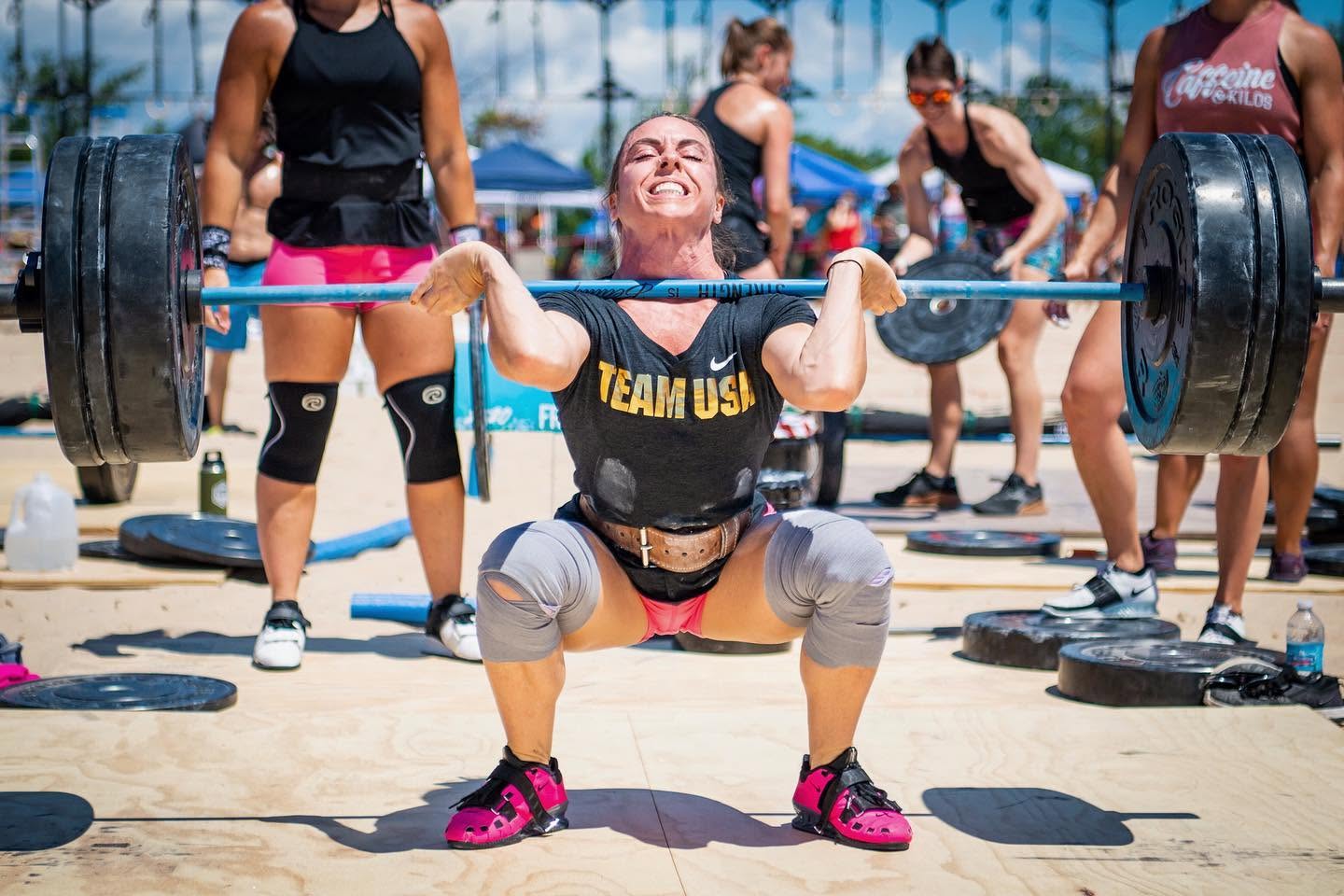
Most notably, it is the system behind Alyssa Ritchey, 49 kg Pan-American champion and Pan-American record holder. It has produced five separate American record holders and more than a dozen national champions across weight classes. Countless additional athletes have used this system to hit competition PRs, qualify for national events, and make measurable progress after years of stalling on other programs.
The reason generic templates cannot replicate those results is not a matter of hard work or commitment; it is a matter of individualization. No two athletes are the same, and a pre-made template will never fully capture what an individual athlete needs at each stage of their development. Accurately selecting the correct exercises, managing training intensity week-to-week, adjusting volume strategically, and keeping an athlete on the right progression for their body and their goals, this is the work that static templates simply cannot do. Their rigid structure does not adapt, and that rigidity creates more problems than it solves over a full training cycle.
The 7-day free trial inside the Team Aita app exists precisely to demonstrate this difference in a way that no amount of explanation can. One week of individually adjusted programming will tell you more about what this system is than any comparison to a free template.
Who This Program Is For
This Olympic weightlifting program is designed for athletes who have moved past the introductory stage and are training with specific performance goals. It works best for athletes who already have a working Snatch and Clean & Jerk and are looking for a system that can take them further than a template can.
✓ This Is for You | ✗ This Isn't for You |
|---|---|
✓ You have completed a beginner weightlifting cycle and have a working Snatch and Clean & Jerk | ✗ You are a complete beginner with under 6 months of practice on the Olympic lifts |
✓ You are training for your first or next competition and want structured, periodized programming | ✗ If you want quick fixes to your technique and programming. |
✓ You are an intermediate or advanced lifter who has plateaued on static programming | ✗ If you are currently working with a coach. |
✓ You want real coaching feedback on your lifts, not just an occasional form check in a group feed. | ✗ You are not interested in making progress on your lifts. |
If you are just starting out, complete beginners should start with our beginner program here before moving to this system.
Inside the Team Aita App
Access to a national-champion coaching system is only useful if it is built into a platform you can actually train from. Here is what the Team Aita app delivers, and what each feature means for your training.
Individualized programming — each program is generated based on your technical profile, your training history, and your current program goal. You are not following a generic week; you are following your week.
AI-powered adjustments — the system reads your training data and adjusts the following week's load, volume, and exercise selection based on how you actually performed. This is the core of what separates Team Aita from a PDF template.
Live coach feedback — this is a feature that no template and no Ai can replicate. You submit lift videos directly in the app and receive technical feedback from real coaches — not AI-generated cue suggestions, but direct input from coaches who know the sport. Specific corrections, specific programming modifications, applied to your actual lifts.
Technical weakness targeting — when you set up your program, you identify your specific technical faults: jumping forward in the Snatch, pressing out in the Jerk, losing position in the Clean. The system selects corrective variations and drills to address those faults directly, rather than generic programming.
Full program control — you can swap movements, modify sessions to work around available equipment, adjust training days per week, and make changes that are reflected in the overall program structure rather than just a single session.
Session logging and estimated max tracking — every lift logged becomes part of your performance record. The system uses this data to track your implied one-rep max over time, identify trends, and inform weekly adjustments.
Athlete community — you train alongside other lifters using the same system. The community is made up of athletes who are serious about their progress, not a general fitness forum.
Frequently Asked Questions
How many days a week is the program?
The foundation of this program is three days per week, structured around Snatch and Clean-and-Jerk work, with Squat and pulling accessory exercises in each session. This is intentional: the Olympic lifts require technical freshness to practice well, and more training days early in a development cycle can reinforce errors rather than eliminate them. For advanced athletes preparing for competition, the program scales to five days per week with targeted specialization sessions added to the base structure.
How is this different from a free Olympic weightlifting program?
A free program is static — it is the same document for every athlete who downloads it, and it cannot change based on how you are actually responding to the training. This system adjusts weekly based on your session data: if you are ahead of schedule, load increases to match your fitness; if you are under-recovering, volume is reduced to get you back on track. The 7-day free trial gives you direct access to that difference at no cost — one week of individually adjusted programming is more informative than any explanation of why static templates fall short.
How long before I see results from this program?
Most athletes notice meaningful technical improvement within two to three weeks — positions become more consistent, and the corrective variations start to address the specific faults they were identified for. Competition-ready totals, in which an athlete is delivering reliable performances at or near their current ceiling, typically develop within eight to twelve weeks, depending on starting level and training consistency. The program is built for long-term development, not short-term peaking, so results compound over the full training cycle.
Is this program suitable for intermediate and advanced lifters?
Yes — and it is where this system is most effective. The AI adaptation means the program scales with the athlete: an intermediate lifter who is making consistent progress gets a different program from an advanced athlete managing competition prep and higher weekly loads. With real, frequent coaching feedback, our athletes make consistent progress.
Start Your Weightlifting Journey
Join the team and start coaching with clarity — use data, readiness, and quality work to drive better sessions.